API Gateway charges explained

API Gateway charges explained illustration

API Gateway charges can appear suddenly because every request passing through your APIs can contribute to the final AWS bill.

When apps, websites, integrations, mobile users, or automation tools send more traffic through your endpoints, API Gateway costs can rise without any obvious server change.

Explain my AWS bill

What API Gateway is actually charging for

API Gateway pricing is mainly based on usage, which means request volume is usually the first place to check when costs increase.

The bill may also include data transfer, caching, WebSocket connections, private APIs, REST APIs, HTTP APIs, and traffic flowing between backend services.

Common API Gateway cost drivers include:

Related AWS cost pages include DynamoDB charges explained, ECS charges explained, and EC2 charges explained.

Example API Gateway bill increase

Example API cost analysis

Previous month:
$38

Current month:
$141

Largest API Gateway-related changes:

 API requests increased by $67
 Data transfer increased by $18
 API cache usage increased by $9
 WebSocket traffic increased by $6

Possible causes:

 More application users
 Higher mobile app activity
 Additional API integrations
 Increased backend communication
 Traffic spikes from external systems

Suggested actions:

 Review request volume
 Check API usage patterns
 Audit cache settings
 Monitor data transfer
 Compare traffic with previous periods

Why API traffic can grow unexpectedly

API Gateway costs often rise when user behaviour changes, because each screen load, button click, app refresh, or backend call may create extra API traffic.

A product launch, marketing campaign, mobile update, webhook integration, or automation workflow can create far more requests than expected.

API traffic can increase after:

  • Launching a new feature
  • Adding more app users
  • Connecting third-party tools
  • Increasing polling frequency
  • Running automated workflows

For wider cost investigations, read Route 53 charges explained, ElastiCache charges explained, and AWS so expensive this month.
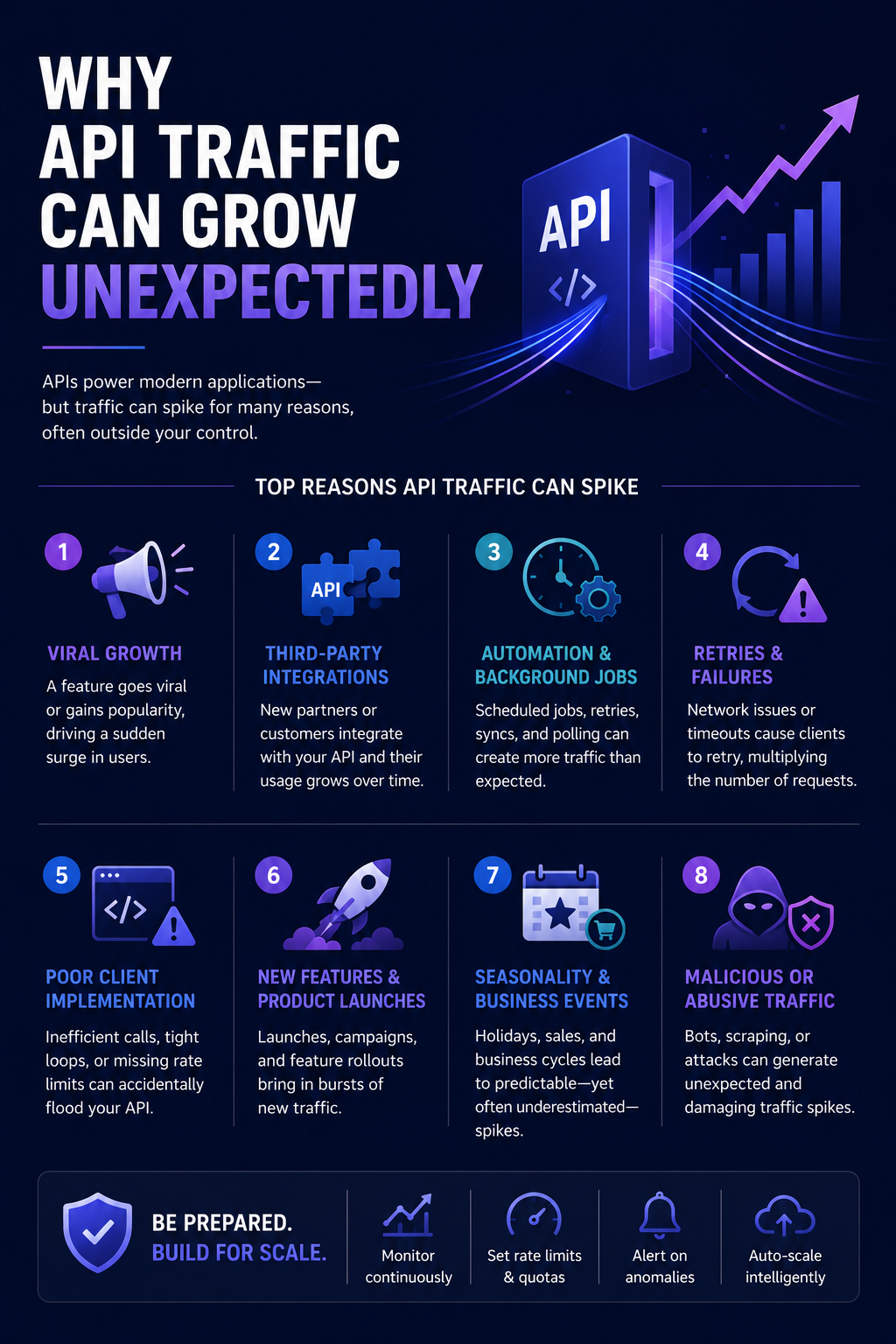

API Gateway cost increase illustration

Common reasons API Gateway bills rise

The most common reason API Gateway becomes more expensive is that more requests are reaching your API than before.

Sometimes the increase is healthy growth, but it can also come from inefficient polling, retry loops, monitoring tools, scripts, or one endpoint being called far too often.

Things worth checking include:

If API Gateway is not the only service increasing, compare it with EC2 cost spike explained, EC2 bill doubled, and AWS bill disaster.

Need help understanding API Gateway costs?

ExplainMyBill.ai reviews AWS billing changes and turns API Gateway cost increases into plain-English explanations so you can see what changed and why your bill moved.

Explain my AWS bill

Frequently asked questions

Why did my API Gateway costs increase?

API Gateway costs usually increase because of higher request volume, more users, extra integrations, caching usage, WebSocket traffic, or larger API responses.

Can API Gateway become expensive?

Yes. API Gateway can become expensive when request volume grows into millions of calls or when applications repeatedly call endpoints unnecessarily.

How do I investigate API Gateway billing?

Compare request count, endpoint usage, data transfer, caching, WebSocket connections, and recent app changes against the previous billing period.

Related AWS billing guides